
Dentures Beachwood
A Renewed Smile Is Within Your Reach
Dentures have helped generations of patients to enjoy renewed chewing power, heightened confidence, and other benefits. If you have several missing teeth, they might be able to help you as well! Our Beachwood team offers top-quality prosthetics that are designed to complement your natural features and provide reliable function. Continue reading below to learn more about dentures, or contact The Center for Advanced Dentistry directly to request a tooth replacement consultation.
Why Choose The Center for Advanced Dentistry for Dentures?
- Traditional and Implant Dentures Available
- Easy & Accurate Digital Dental Impressions
- Beautiful, Natural-Looking Prosthetics
Who Is a Good Candidate for Dentures?
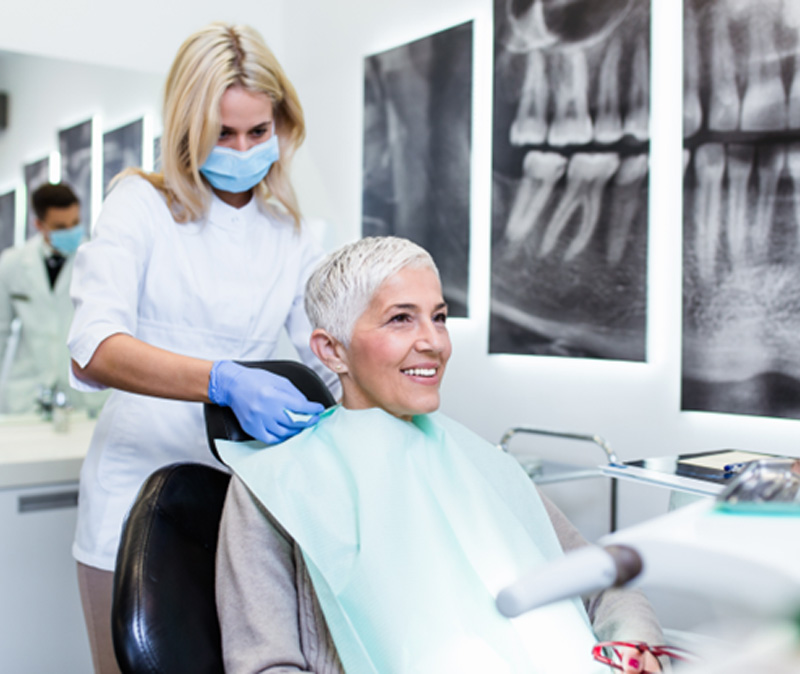
Dentures can be a suitable choice for almost anyone with missing teeth. During your tooth replacement consultation, we will assess the state of your oral tissues, learn about your goals for treatment, and make an appropriate recommendation on your next steps. If dentures are not quite right for you, we may propose an alternative plan. For example, you may need gum disease therapy or other services before your mouth can support dentures. Or, we might suggest that you get a bridge or dental implants instead.
Read More Read Less
Effects of Missing Teeth

Missing teeth can be the result of several different causes, such as decay, gum disease, trauma, genetics, and more. Regardless of why you lost your teeth, your condition may affect your life in multiple ways.
For example, you may find it difficult to eat a variety of nutritious and tasty foods. You may also be reluctant to engage with others in social situations, perhaps due to the appearance of your toothless smile or the dietary restrictions caused by edentulism. Sadly, many people with extensive tooth loss even have low self-esteem.
The good news is that dentures can reduce or even eliminate many of the consequences of missing teeth.
What Qualifies You for Dentures?
Dentures might be a great option for you if:
- You have lost several or all of your teeth. If you have lost just one or two teeth, a different treatment might be a better fit.
- Your natural teeth are in poor condition. We will try to preserve your natural teeth if possible, but if they are extensively damaged or extremely weak, it may be best to extract them and pursue dentures.
- Your oral tissues are healthy enough to support dentures. For example, you should be free of active gum disease.
Alternative Tooth Replacement Options
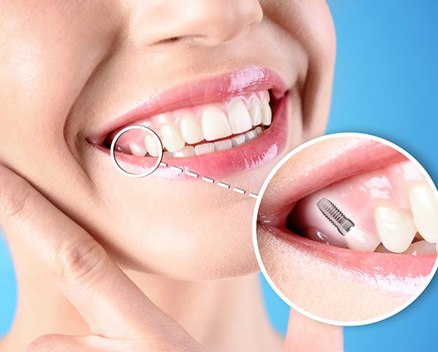
If dentures are not quite right for you, we might suggest that you get one of the following instead:
- A dental bridge. A bridge is a fixed prosthetic that we attach to your remaining natural teeth. It can replace one or more missing teeth, and it usually takes just a few appointments to design and place. A dental bridge may last for 10 years or longer.
- Dental implants. Dental implants are prosthetic tooth roots that get surgically placed into the jawbone. They can support crowns, bridges, and dentures. They have the potential to last for several decades, and they are remarkably strong. Due to their many benefits, they are widely regarded as the gold standard of tooth replacement.
Learn More About Dental Bridges
Learn More About Dental Implants
Types of Dentures
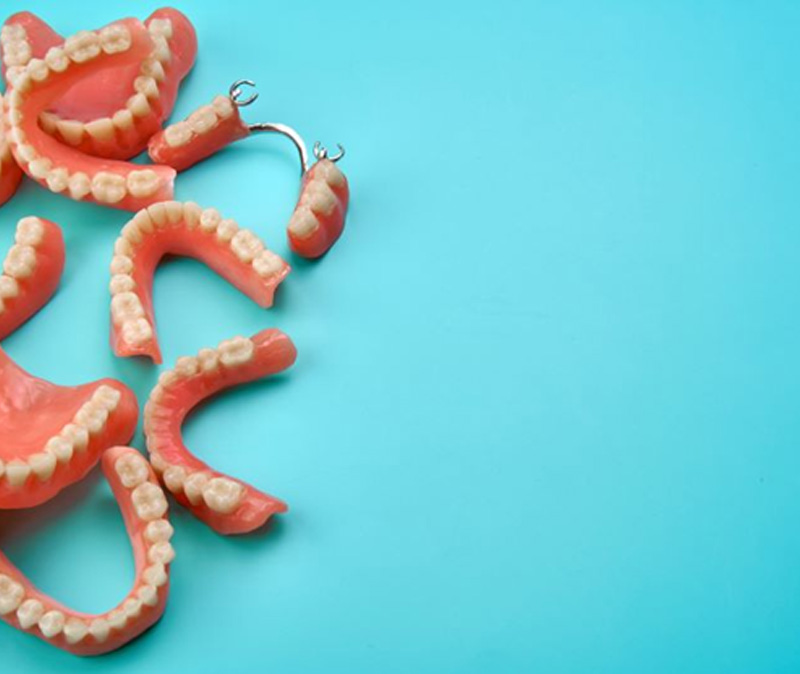
There are a few different types of dentures, each of which is suited to different situations. During your consultation, we will recommend the type of prosthetic that best fits your circumstances and preferences. Depending on the details of your situation, you might be a candidate for partial dentures, full dentures, or implant dentures.
Partial Dentures
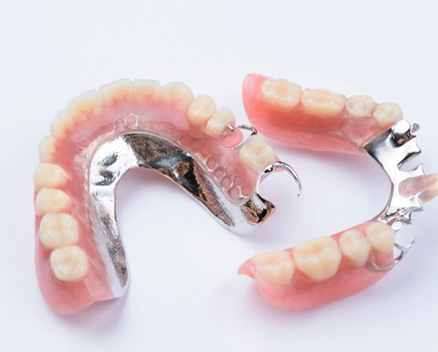
Instead of replacing a full arch of teeth, a partial denture fits in around the remaining dentition. Small clasps, usually made of metal or acrylic, help partial dentures to stay in place during eating and speaking. They can be a great option if your natural teeth are still in decent health.
Full Dentures
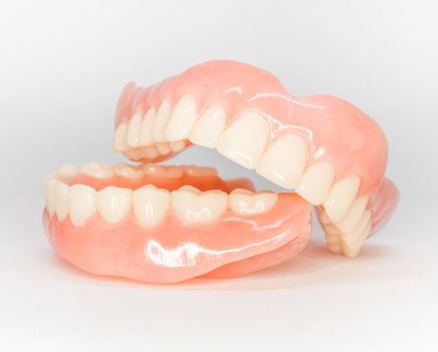
A full denture replaces an entire arch of missing teeth. Suction or a bit of adhesive can help full dentures to remain secure throughout each day. These prosthetics are fully customized for each patient, and they are designed to be as functional and attractive as possible.
Implant Dentures
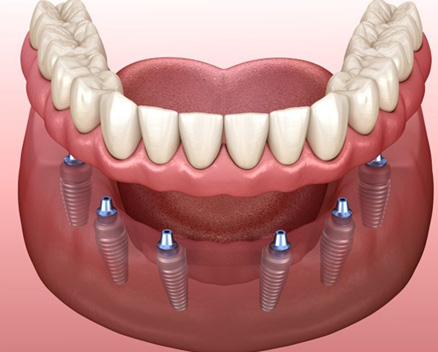
Instead of relying on clasps, suction, or adhesive to stay in place, implant dentures are anchored in the mouth via prosthetic tooth roots (dental implants). The implants bond with the jawbone and can provide a very strong base of support for artificial teeth. Due to their outstanding stability and strength, we often recommend dental implants as the gold standard of tooth replacement.
The Benefits of Dentures

Some of the most noteworthy benefits of dentures include:
- Restored Appearance: Dentures provide a natural-looking smile, which allows them to enhance facial aesthetics and potentially boost your self-confidence.
- Improved Speech: After you adapt to speaking with dentures, you can expect to be able to communicate clearly and easily.
- Better Chewing Ability: Dentures improve chewing function, allowing you to enjoy a wider variety of foods and maintain good nutrition.
- Cost-Effective: Compared to other tooth replacement options, traditional dentures are generally more affordable and accessible for most patients.
Dentures Aftercare

Once your dentures are in place, they have the potential to provide you with reliable function and confident smiles for several years! However, if you want them to live up to their purpose, you need to shoulder some responsibility for them. You should get into a good routine of denture care and maintenance — and that means you should visit us regularly!
During your routine appointments, our Beachwood team will inspect your dentures and examine your oral tissues. We will look for any signs of problems and advise you on how you can get the most out of your prosthetic. If any issues arise, we can provide timely treatment.
Besides attending regular appointments, what else can you do to care for your dentures? Here are some basic best practices:
Read More Read Less
Removable Dentures
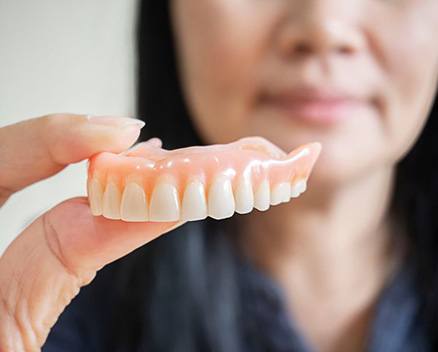
Remove After Eating
It should be your habit to remove your dentures after each meal and thoroughly rinse them. This helps to get rid of food particles and prevent the buildup of plaque and bacteria. Be sure to use cool or lukewarm water for this, since very hot water could warp your dentures and cause them to lose their fit.
Clean Your Restoration
In addition to regularly rinsing your dentures, you should also have a thorough daily cleaning routine. Each night before bed, remove your prosthetic and use a soft-bristled toothbrush or denture brush, along with a mild cleaning agent, to clean all their surfaces. Do not use regular toothpaste for this, since it is abrasive and could scratch the dentures’ teeth. Then, soak your dentures overnight in water or a cleaning solution. In the morning, rinse them thoroughly before you wear them again.
Keep Your Dentures Safe
Dentures are durable, but they can be damaged if they are not handled properly! When you remove them, do so over a folded towel or a sink full of water. This will give them a soft landing if you accidentally drop them. Also, be sure to store them out of reach of small children and curious pets — dentures might seem like an attractive toy to such young and innocent minds!
Remove When You Sleep
You should not wear your dentures overnight. Removing them is the best course of action because it allows your gums to breathe and encourages good circulation. Nightly removal also allows for thorough oral hygiene and can reduce the risk of bacterial buildup and various types of infections. Keep them in a cleaning solution while you sleep so they can be extra-fresh each morning. (Do not allow them to completely dry out; this could cause their shape to change.)
Notice Changes
You should be diligent about monitoring both your oral health and the state of your dentures. Things like odors, gum irritation, and changes to the fit of your dentures are all issues that should be addressed promptly. If you notice anything is amiss, contact our team so we can assist you. We can provide practical guidance, and we can even reline (adjust) your prosthetic if necessary.
All-on-4 Dentures
All-on-4 Dentures and fixed implant dentures require slightly different care than removable dentures. Since they are in your mouth 24/7, you can treat them almost like you would treat real teeth. For example, you should brush them twice a day (use non-abrasive toothpaste and a soft brush) and floss regularly. You may also need to use a floss threader or water flosser to clean the area under your restoration. Regular use of mouthwash can also help to clean all the little nooks and crannies in your mouth.
Ask our team if you would like advice or product recommendations to help you take excellent care of your prosthetic teeth!
Dentures FAQs
How Long Will You Have to Wait to Get Dentures After Your Teeth Are Pulled?
In most cases, there is a wait time of 6 – 8 weeks between tooth extractions and the delivery of new dentures to our Beachwood office. This gives the gums a chance to heal after tooth removal so they can adequately support a new prosthetic.
However, that is just a rough estimate, and every case is unique. Some patients qualify for an immediate denture, which is designed before tooth extractions and ready to use immediately afterward. Immediate dentures tend to need a lot of adjustments because the mouth can change quite a bit as it heals from extractions.
With implant dentures, the waiting time can be longer due to the need for an additional surgery, which involves placement of prosthetic tooth roots.
During your tooth replacement consultation, our team can give you an estimate for your treatment timeline.
What Should You Do if Your Dentures Break?
If your dentures break, call our team right away. Do not try to repair your dentures yourself with superglue or other household materials; you could end up worsening the damage. Plus, you might accidentally use toxic items to make the repair, which could irritate your oral tissues or make you sick.
When you visit our office, we might be able to repair your dentures in-house. Otherwise, you may need to send them to a laboratory. If the damage is severe enough, you might need to get a completely new prosthetic.
What Type of Denture Adhesive Should I Use?
There are a few different types of denture adhesives. Lots of patients like adhesive strips because they are pre-cut and do not have a lot of potential for making a mess. Others prefer powder or cream. Powders are convenient and easy to sprinkle onto a denture. Creams provide a secure hold and may be a great fit for sensitive gums.
You might have to try out a few different adhesive products before you find one that you really like.
Can Dentures Become Ill-Fitting?
Our team carefully designs dentures so they provide a secure, comfortable fit. However, that fit can change over time as your underlying bone and gums start to change. This is a natural process; without tooth roots to stimulate your jawbone, it is likely to shrink over time.
To keep your denture fitting well, you should visit us periodically for relines. We can add material to the base of your prosthetic so it retains a snug and functional fit. Eventually (usually after 5 – 7 years), it will be time to replace your denture with a new one that is customized to fit your mouth’s new shape.
Can I Reline My Dentures Myself?
It is technically possible to perform a DIY denture reline. However, we strongly advise against doing so.
Without professional training, you might end up applying too much relining material or applying it unevenly. This can actually make your dentures fit worse than they did before. This can cause additional discomfort and may even lead to the need for a completely new denture.