
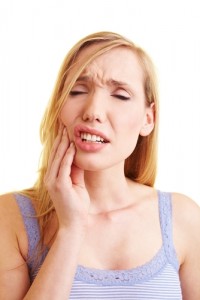
 There’s a term you may have come across if you’ve visited our site before. It’s a term that sounds complicated but actually concerns a simple and common condition. We’re talking, of course, about neuromuscular dentistry.
What is it?
In short, neuromuscular dentistry looks at your jaw muscles, your jaw joints, and how your teeth fit together (also known as occlusion). When a problem occurs in one of these areas, the result can be painful symptoms like frequent headaches, neck or shoulder pain, ringing in the ears, and more.
The two conditions most commonly associated with neuromuscular dentistry are TMJ disorder and bruxism. But the good news for patients from Beachwood and surrounding areas is that both of these can be effectively treated. With the use of an orthotic appliance, Dr. Hornstein can deliver comfortable relief that will help you preserve your smile and reclaim your life.
Protect Your Smile with an Orthotic Appliance
An orthotic appliance is custom-made for your smile so that it fits comfortable over your teeth. They’re designed to correct your bite, bringing it into its natural alignment and easing strain on your joints and muscles.
Have you recently learned that you have a neuromuscular condition like TMJ disorder or bruxism? Call The Center for Advanced Dentistry to schedule an appointment with Dr. Hornstein. During your appointment, Dr. Hornstein can talk to you about your situation and begin working on a treatment plan to help you save your smile and reclaim your life.
 Dental health and overall health go hand-in-hand. That’s why
 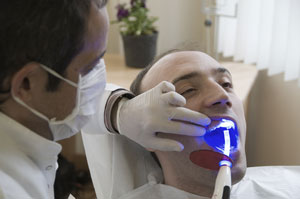 When you think of the word “cancer,” what comes to mind first? Is it oral cancer? Probably not. But oral cancer is as serious as any other form, and in some cases, much more serious. Oral cancer claims the life of one American every hour. What’s more, this year around 40,000 Americans will be diagnosed with some form of the disease.
 For patients who’ve kept their smiles hidden because of low self-confidence,
  Some smiles need extra protection. This is especially the case with children who are just learning to brush, but even adults need a little help from time to time. Maybe your teeth are just more prone to decay, or you continue to have trouble with hard-to-reach areas. Whatever the reason,
 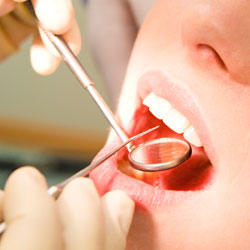 What sets this year apart from other years? It’s a leap year, meaning that February has one more day than it normally does. But if leap years only happen every four years, something like a dental checkup should happen much more often than that. In fact, they should happen about every six months.
 With Valentine’s Day almost here, there’s no better time than now to bring up the connection between your head and your heart. Often, the heart, when it’s thought of at all, is pictured as something decorative. But the heart is a vital organ, and its wellbeing is at least partially dependant on the health of your smile.
 The words “root canal” often strike fear in the hearts of patients. But what many may not realize is that modern tools have made
  With 2011 behind us and 2012 just a few days old, you may be thinking about what improvements you can make in your life. Two of the most popular resolutions out there are eating better and exercising more. These are great, but we’d also like to encourage our patients to keep their smile in mind. Make 2012 a banner year for your oral health by making regular visits to
  It’s been almost a full week since Thanksgiving, but as you know, the holiday season is far from over. With Christmas and New Year’s just around the corner, we’re entering a time of almost nonstop holiday goodies and parties. And while we don’t want to spoil anyone’s fun, we also don’t want you to forget about your smile.